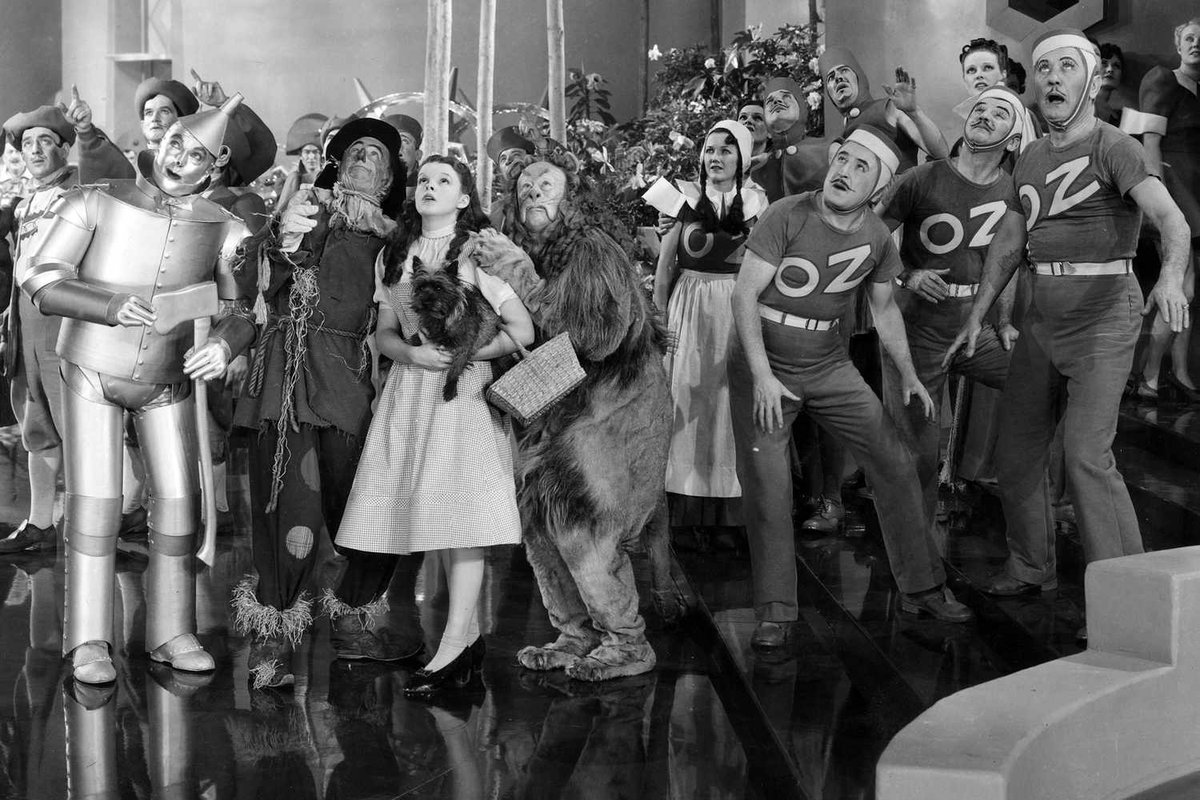
As a seasoned journalist, I've seen countless tales spun from the magic of moviemaking. But few productions hold as much raw, earnest storytelling behind the camera as Return to Oz. Stepping into the shoes of iconic characters is never easy, especially when those shoes belong to the most beloved child heroine in cinematic history. The Behind the Scenes of Return to Oz Casting is a fascinating journey, revealing the immense pressure, ingenious technical solutions, and sheer luck that brought this unique fantasy to life.
At a Glance: Finding Oz's New Faces
- Dorothy's Daunting Quest: Over 400 children auditioned for the role of Dorothy, ultimately won by the then 10-year-old Fairuza Balk.
- A Young Talent Pool: Co-star Emma Ridley (Princess Ozma) was also among the initial 400 hopefuls for Dorothy.
- Puppetry Prowess: Bellina the chicken was an animatronic marvel, requiring up to four puppeteers, and was an early triumph for future industry giants like Mak Wilson and Steve Norrington.
- VFX Pioneers: Will Vinton, of "The California Raisins" fame, lent his stop-motion expertise to the film's memorable claymation sequences.
- Director's Rescue: Walter Murch, the acclaimed director, nearly lost his job early in production, saved by the intervention of industry legends George Lucas, Steven Spielberg, and Francis Ford Coppola.
- The Unseen Oz: An extremely rare "director's cut" with extended scenes, including a sequence of Princess Mombi and the Wheelers, exists but is largely unavailable to the public.
The Unkindest Cut: Finding a New Dorothy for Oz
Imagine the weight of expectation. You’re making a sequel to one of the most beloved films of all time, and your lead character, Dorothy Gale, is synonymous with Judy Garland. That’s the unenviable task Disney faced in the early 1980s with Return to Oz. It wasn't just about finding a talented child actor; it was about finding someone who could carry the emotional core of a darker, more melancholic Oz, someone who felt both vulnerable and resilient.
The search for Dorothy was, by all accounts, exhaustive. Over 400 hopefuls, children from across the globe, stepped forward for screen tests. This wasn't just a typical audition; it was a grueling process designed to find a young actress capable of portraying genuine fear, wonder, and determination without falling into melodrama. The film's tone, which diverged significantly from the whimsical musicality of its predecessor, demanded a performance grounded in realism, even amidst talking chickens and sentient pumpkins.
Fairuza Balk: The Girl Who Walked Through Fire
At just 10 years old, Fairuza Balk emerged as the chosen one. Her performance in Return to Oz is remarkable for its nuance and intensity. She didn't try to imitate Judy Garland; instead, she brought a raw, naturalistic quality to Dorothy that perfectly suited director Walter Murch's vision. Murch, a renowned film editor making his directorial debut, was known for his immersive approach, and Balk, despite her youth, was able to deliver the emotional depth required for a Dorothy battling not only external threats but also internal anxieties about her sanity.
Interestingly, Fairuza Balk was the youngest child to even try out for the role, a testament to her precocious talent. Among those she "beat out" was Emma Ridley, who would later be cast in the film as the ethereal Princess Ozma. This speaks volumes about the depth of talent the casting directors encountered and how competitive the process was. It highlights that the filmmakers weren't just looking for a "star"; they were looking for the right Dorothy, a child actor who could convey genuine emotion and stand her ground amidst a menagerie of unsettling characters.
Bringing Creatures to Life: Beyond Human Actors
While Fairuza Balk's performance anchors the film, a significant portion of the "cast" were not human at all. Return to Oz was a pioneering effort in animatronics and practical effects, bringing to life some of Oz's most memorable inhabitants. This wasn't just about building puppets; it was about giving them personality, movement, and a tangible presence that could interact seamlessly with human actors.
Bellina: A Feathered Marvel of Animatronics
Perhaps the most celebrated non-human character is Bellina, Dorothy's talking chicken companion. Creating Bellina was a monumental task. The animatronic puppet required up to four puppeteers to operate simultaneously, each controlling a different aspect of her movements – head, eyes, beak, and body. This complex orchestration brought the chicken to life with astonishing realism for the time, allowing her to convey a wide range of emotions, from sassy exasperation to genuine fear.
Bellina was not a single entity; different versions were crafted for various purposes: hand puppets for close-ups, rodded puppets for broader movements, and the fully animatronic marvel for complex interactions. This multifaceted approach was crucial for integrating Bellina so seamlessly into the narrative.
For lead puppeteer Mak Wilson, Bellina was a significant milestone. It was his very first animatronic puppet, a foundational experience that launched him into a career bringing iconic characters to life, including Michaelangelo in Teenage Mutant Ninja Turtles, Babe in Babe, Earl in Dinosaurs, and the Vogans in The Hitchhiker's Guide to the Galaxy. Wilson's ability to imbue Bellina with such distinct character speaks to the artistry and technical skill required behind the scenes.
While Lyle Conway is often credited, much of Bellina's intricate creation was the work of a young Steve Norrington, who would later achieve fame as a film director, notably for Blade. This is a common story in the world of special effects, where talented individuals often contribute significantly before receiving full recognition or moving on to larger roles.
The Menagerie of Oz: Claymation, Costumes, and Contraptions
Beyond Bellina, Return to Oz populated its world with a host of other unforgettable characters. The menacing Wheelers, with their cackling laughter and wheels for hands and feet, were actors in elaborate costumes and prosthetics, their movements a disturbing blend of human and machine. Tik-Tok, the clockwork man, was a marvel of design and mechanics, operated by a performer inside the suit. Jack Pumpkinhead and the Gump also showcased ingenious practical effects that blended puppetry, costume design, and human performance.
The film also utilized stunning claymation sequences, particularly for the Nome King's transformations. These were handled by none other than Will Vinton, whose studio would later become famous for "The California Raisins." Vinton's distinctive style added another layer of visual wonder to the film, blending seamlessly with the animatronics and live-action sequences. The combination of these varied techniques gave Oz a unique, tactile quality that felt both magical and genuinely unsettling. For more details on the individuals who breathed life into these roles, you might want to Explore the Return to Oz cast.
The Adult Ensemble: Seasoned Talents in a Darker Oz
While Fairuza Balk was the heart of the film, the adult cast provided the crucial gravitas and villainy that defined Return to Oz's darker tone. These were seasoned actors, capable of delivering performances that were both theatrical and deeply unsettling, grounding the fantastical elements in human emotion (or its terrifying absence).
- Nicol Williamson as the Nome King: Williamson delivered a masterful performance, initially as a voice actor and later through motion capture (an early form for its time) and prosthetics. His voice, a menacing purr capable of sudden, booming rage, perfectly captured the chilling power of Oz's new adversary. He brought a genuine sense of threat to the character, making the Nome King a truly memorable villain.
- Piper Laurie as Aunt Em and Princess Mombi: Laurie, known for her intense roles in films like Carrie, brought a sympathetic warmth to Aunt Em and a chilling detachment to the multi-headed Princess Mombi. Her dual role highlighted the blurred lines between Dorothy's Kansas reality and her Ozian nightmare, a key thematic element of the film.
- Jean Marsh as Nurse Wilson and Mombi: Marsh also played a dual role, embodying the stern Nurse Wilson in Kansas and the primary, terrifying form of Princess Mombi in Oz. Her portrayal of Mombi, with her collection of interchangeable heads, was genuinely horrifying, a testament to her ability to create a truly iconic antagonist.
These actors, alongside the likes of Matt Clark (Uncle Henry), Pons Maar (the Lead Wheeler), and Deep Roy (the Tin Woodman), provided the rich tapestry of character that made Oz feel both familiar and utterly transformed. Their ability to deliver nuanced performances against a backdrop of complex practical effects elevated the film beyond a simple children's fantasy.
Leadership Under Fire: Walter Murch's Trial by Oz
Directing a big-budget fantasy film, especially one with such a legacy, is an immense challenge. For Walter Murch, an acclaimed editor and sound designer, Return to Oz was his directorial debut. The pressure was immense, and the learning curve steep. In fact, Murch was nearly fired at the very beginning of production.
This kind of stress, a director on the brink, can ripple through a set, impacting cast and crew alike. Imagine being a child actor like Fairuza Balk, sensing the tension, or a puppeteer trying to perfect intricate movements under such scrutiny. It speaks volumes about the dedication of everyone involved that the production persevered.
Murch's plight caught the attention of some of the most powerful figures in Hollywood: his friends George Lucas, Steven Spielberg, and Francis Ford Coppola. These cinematic titans, recognizing Murch's talent and the challenging nature of the project, flew to the UK and spent a week on set. Their presence and support were instrumental, not just in saving Murch's job, but in providing him with the guidance and confidence needed to navigate the complex production. This unusual intervention is a legendary tale in film history, highlighting the camaraderie among these directors and their commitment to artistic vision. Their support undoubtedly stabilized the production, allowing Murch to continue shaping the unique, darker vision of Oz that ultimately reached screens.
Unseen Moments: The Elusive Director's Cut
The creative process in filmmaking often involves difficult choices, with scenes trimmed or removed entirely for pacing, tone, or runtime. Return to Oz is no exception, and there's a fascinating whisper of an "unofficial, extremely rare 'director's cut'" that adds another layer to its behind-the-scenes mystique.
Only a couple of these studio copies are known to exist, making them legendary among fans. One extended scene depicts Princess Mombi entering an underground tunnel with the Wheelers through a hole in her palace garden wall, following Dorothy's escape. This segment was cut from the theatrical release. What does such a cut imply? It suggests that Murch likely filmed more material that further fleshed out the motivations or actions of his antagonists, adding to the film's already dark atmosphere. The decision to remove it could have been for pacing, to maintain a certain level of mystery, or even to soften some of the film's more intense elements for a broader audience.
The existence of such a rare cut underscores the director's original intentions and the collaborative (and sometimes contentious) nature of final editing. It leaves fans wondering what other subtle differences or extended moments might exist, further enriching the already dense world of Return to Oz. It's a reminder that the film we see on screen is often just one iteration of a much larger creative vision. No other alternate versions of Return to Oz are known to exist, making this particular "director's cut" a truly unique and tantalizing glimpse into what might have been.
The Enduring Magic: Why This Cast Still Captivates
Decades after its release, Return to Oz remains a divisive but beloved film. Much of its enduring appeal lies squarely with its cast, both human and animatronic. Fairuza Balk's powerful performance continues to resonate, capturing the hearts of new generations who find her Dorothy's struggle relatable. The innovative puppetry and animatronics, particularly Bellina, still hold up remarkably well, a testament to the talent of Mak Wilson, Steve Norrington, and the entire special effects team. The chilling portrayals by Nicol Williamson, Piper Laurie, and Jean Marsh contribute to the film's distinct atmosphere, making it a unique entry in the fantasy genre.
The collaborative spirit, even under immense pressure (as seen with Walter Murch's directorial journey), allowed for a film that pushed boundaries. It challenged notions of what a children's fantasy could be, embracing darker themes and a more grounded approach to magic. The casting, both in terms of finding the right human actors and in the meticulous creation of its non-human characters, was central to achieving this bold vision.
What Made the Return to Oz Casting So Special?
What sets the casting of Return to Oz apart isn't just the sheer number of auditions or the technical wizardry. It's the profound commitment to finding exactly the right fit for a film that defied easy categorization.
- Courage to Be Different: The filmmakers weren't afraid to step away from the iconic portrayal of Dorothy, opting instead for Fairuza Balk's raw, vulnerable performance that perfectly matched the film's darker tone. This was a bold move, and it paid off, giving us a Dorothy for a new generation.
- Pioneering Practical Effects: The emphasis on animatronics and puppetry, from Bellina to the Wheelers, meant "casting" the right creative teams and individuals (like Mak Wilson and Steve Norrington) who could imbue these creations with believable life. This commitment to practical effects made Oz feel tangible and immersive.
- Balancing Light and Shadow: The adult cast, particularly the villains, were chosen for their ability to deliver performances that were genuinely unsettling, providing the necessary counterpoint to Dorothy's innocence. This balance was crucial for a film aiming for a more complex emotional landscape.
- The Power of Collaboration: The dramatic intervention by Lucas, Spielberg, and Coppola for Walter Murch underscores the importance of a stable, supportive environment for artistic vision to flourish. When the director feels secure, the performances and technical execution can truly shine.
Ultimately, the casting of Return to Oz was a testament to vision, perseverance, and a willingness to push creative boundaries. It resulted in a film that, for all its initial controversy, has carved out a unique and lasting place in the hearts of those who ventured back to Oz with Fairuza Balk's brave Dorothy.