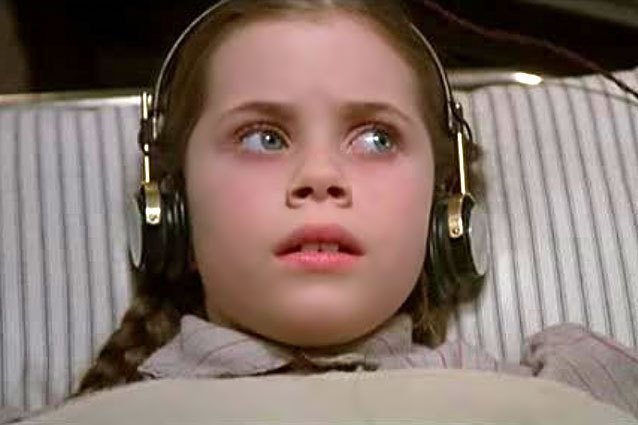
When we talk about Return to Oz, the 1985 Disney film that dared to take L. Frank Baum's beloved world down a darker, more unsettling path, it’s impossible not to acknowledge the young actress at its heart. The Child Star of Return to Oz (Fairuza Balk) stepped into Dorothy Gale’s ruby slippers with a quiet intensity, a performance that, much like the film itself, defied expectations and carved out its own unique legacy. Decades later, Balk remains fiercely protective of the movie that introduced her to the world, often defending its grim aesthetic and distinct vision against those who perpetually compare it to its Technicolor predecessor. She knew then, as she knows now, that this wasn't Kansas anymore, and it certainly wasn't the Oz you thought you knew.
At a Glance: Fairuza Balk & the Unforgettable Oz Sequel
- A Bold Debut: Fairuza Balk, at just 9 years old, took on the iconic role of Dorothy in Disney’s 1985 sequel, Return to Oz.
- A Different Oz: The film presented a significantly darker, more faithful adaptation of L. Frank Baum's later Oz books, beginning with Dorothy facing electroshock therapy.
- Balk's Defense: She has consistently defended the film as "sweet" and misunderstood, vehemently rejecting comparisons to Judy Garland's portrayal.
- Cult Classic Status: Initially a critical and box office disappointment, Return to Oz has since garnered a loyal cult following.
- Pioneering Practical Effects: The movie is celebrated for its inventive use of animatronics and contortionists, bringing characters like Tik-Tok and Jack Pumpkinhead to life without CGI.
- Enduring Legacy: Balk's performance laid the groundwork for a distinctive career, marked by roles in films like The Craft and American History X.
The Unexpected Dorothy: Fairuza Balk's Bold Stand
Imagine being a child, cast in a role made famous by an icon, in a film that intentionally veers sharply from its predecessor. That was Fairuza Balk's reality. From the outset, Return to Oz was a gamble, a Disney production that aimed to recapture the spirit of L. Frank Baum's original books, which were often far more whimsical, peculiar, and yes, even terrifying than the saccharine sweetness of the 1939 MGM musical.
Balk, even as a young actress, understood this distinction with remarkable clarity. She has often expressed her frustration with the constant comparisons to Judy Garland, stating emphatically that she was "very very very very very sick and tired" of them. "I wasn't competing with her," Balk clarified, positioning her portrayal as an entirely separate entity. Her Dorothy was not a wide-eyed ingenue skipping down a yellow brick road, but a bewildered, traumatized child trying to make sense of a world gone mad.
She called Return to Oz a "sweet film" with "lovable creatures," a testament to her perception of the film's core, despite its darker veneer. She understood that adjusting to a new vision of Oz would be difficult for audiences steeped in the 1939 film's mythology. To those who tried to place it alongside other fantasy epics, Balk offered a sharp, defining distinction: "STAR WARS is space. This isn't space, this is Oz." This simple statement cuts to the heart of the film's identity—it's not a grand space opera; it's a specific, grounded, yet surreal journey into Baum's intricate fantasy world.
A Grimmer Emerald City: Return to Oz's Unflinching Vision
The very premise of Return to Oz sets a tone drastically different from its predecessor. The film opens with a despondent Dorothy, unable to stop talking about Oz, leading her aunt and uncle to believe she needs help for her "dream sickness." They take her to a grim, Victorian-era asylum where she is scheduled for electroshock therapy—a startling, almost horrifying beginning for a Disney film, especially one aimed at younger audiences. This scene alone cemented the film's reputation for darkness, immediately signaling that this would not be a gentle re-entry into the Land of Oz.
Once Dorothy escapes, she's swept away (quite literally) back to Oz, only to find a landscape ravaged by time and malevolence. The yellow brick road lies in ruins, the Emerald City is an abandoned, desolate wasteland, and its inhabitants, including the Scarecrow, are missing. An evil Princess Mombi, with her chilling collection of interchangeable heads, reigns supreme, threatening to add Dorothy's head to her macabre assortment. This bleak landscape and terrifying antagonist were a far cry from the vibrant, whimsical dangers of the Wicked Witch of the West.
The film's inspiration came directly from L. Frank Baum’s lesser-known, yet equally imaginative, sequels: The Marvelous Land of Oz, Tik-Tok of Oz, and Ozma of Oz. These books often featured more complex plots, darker themes, and stranger creatures than the first book, a richness that Return to Oz meticulously, and at times unnervingly, brought to the screen. If you're curious about the deeper lore that inspired this unique film, it's worth exploring L. Frank Baum's original Oz tales. The film's commitment to Baum's original, often unsettling, vision is precisely what gave it its distinctive character, despite initial audience discomfort.
The Magic Behind the Scare: Practical Effects That Endure
In an era before widespread CGI, Return to Oz stands as a masterclass in practical effects, animatronics, and the ingenuity of physical performance. The filmmakers relied on incredibly detailed puppetry and contortionists to bring Oz's new, often frightening, inhabitants to life, giving the film a tangible, almost visceral quality that modern computer graphics often struggle to replicate.
Take Tik-Tok, the Royal Army of Oz, for instance. A meticulously crafted, clockwork man, Tik-Tok was brought to life by Michael Sundin, a contortionist who had to bend himself into the character’s spherical torso, walking backward with a miniature TV screen serving as Tik-Tok's front. This wasn't just acting; it was an athletic feat of endurance and precision, allowing Tik-Tok to move with a surprising grace and mechanical realism.
Similarly, Jack Pumpkinhead, the gangly, lovable friend of Dorothy, was portrayed by Stewart Larange, a "body popper" dancer. Larange's unique movement style imbued Jack with an endearing, almost fragile animation, making him feel both real and fantastical. His movements, incidentally, are often cited as a potential inspiration for Tim Burton's iconic Jack Skellington, a testament to the character's lasting visual impact.
These techniques created the memorable creatures of Return to Oz with a weight and texture that CGI often lacks. The Wheelers, with their terrifying cackles and wheels for hands and feet, were stunt performers on custom roller skate-like devices, creating genuinely disturbing visuals. The Nome King, initially a rock creature who transforms into a more human-like figure, was a marvel of animatronics and voice work. The meticulous detail in these creations contributes significantly to the film's unique atmosphere, grounding its fantastical elements in a palpable, sometimes terrifying, reality.
From Box Office Bomb to Cult Classic Status
Upon its release, Return to Oz faced an uphill battle. Critics largely deemed it "too dark for children," a common refrain that haunted its box office performance. The film failed to ignite the imaginations of audiences expecting a lighter, more familiar return to the Emerald City, leading to significant financial disappointment for Disney. It was simply too jarring a departure for many, too unsettling for the family-friendly demographic it was nominally aimed at.
However, time has a funny way of re-evaluating art. Over the decades, Return to Oz slowly but surely began to find its audience. It blossomed into what is now widely considered a cult classic, a film cherished by those who appreciate its unique vision and courage to venture into the more bizarre corners of fantasy. This transformation is a common trajectory for films that are ahead of their time or challenge conventional storytelling. If you've ever wondered what makes a cult classic, Return to Oz is a prime example: a film initially misunderstood, whose unique qualities resonate deeply with a dedicated, often niche, following years later.
Today, Return to Oz is recommended for a specific palate: fans of Tim Burton's gothic sensibilities, readers who devoured the darker, more adventurous Narnia books, and certainly devotees of L. Frank Baum’s original, often more peculiar, Oz tales. It's no longer just a "dark Disney movie"; it's a testament to imaginative filmmaking, a visually stunning journey that dared to be different, and a crucial piece of fantasy cinema history.
Beyond Dorothy: Fairuza Balk's Enduring Legacy
Fairuza Balk's portrayal of Dorothy in Return to Oz was more than just a debut; it was a blueprint for a career defined by distinctive choices and an undeniable screen presence. Even as a child, Balk exuded a gravitas and intelligence that made her Dorothy relatable yet resilient, a survivor in a truly frightening world. This early experience undoubtedly shaped her trajectory as an actress, pushing her towards roles that often explored complex, unconventional characters.
After Oz, Balk continued to build a formidable resume, deliberately moving away from the "child star" label. Her career is marked by memorable performances in films that often delve into the darker, more intricate aspects of human nature. If you look at Fairuza Balk's early career you'll see a pattern of taking on roles that are challenging and often unsettling.
She captivated audiences as the rebellious witch Nancy Downs in The Craft (1996), a role that solidified her status as a queen of the goth subculture and a symbol of empowered, albeit dark, female agency. Later, her raw and powerful performance as the troubled white supremacist girlfriend Stacey in American History X (1998) showcased her incredible range and willingness to tackle difficult subjects. These roles, along with many others, demonstrate that the conviction and unique perspective she brought to defending Return to Oz as a child were not fleeting, but intrinsic to her artistic spirit. She wasn't just a child star; she was, and is, an actress committed to portraying characters with depth and an often unsettling realism.
Why Disney Dared to Go Dark: A Look at the Era
The decision to make Return to Oz so markedly different and darker wasn't an anomaly in Disney's history, but rather a reflection of a specific period where the studio experimented with more mature and challenging fantasy narratives. While Disney is synonymous with wholesome, animated fairy tales, the 1980s saw them venture into live-action territories that pushed boundaries, often with mixed results.
Return to Oz exists within the same creative landscape as films like The Black Cauldron (1985), an animated feature known for its notably grim themes and imagery, which also struggled with audience reception. These ventures suggested a corporate desire to broaden Disney's appeal beyond its traditional, younger demographic, perhaps eyeing the burgeoning market for fantasy epics that were gaining traction with films like The NeverEnding Story or Labyrinth. For more on these boundary-pushing productions, consider exploring Disney's darker fantasy films. It was a bold, if commercially risky, period for the studio, where creative teams were given license to explore narratives with higher stakes and more menacing villains, often drawing directly from the darker corners of classic folklore and literature. Return to Oz was, in many ways, an earnest attempt to honor the true spirit of Baum, even if that spirit was less overtly "magical" and more hauntingly surreal than what audiences typically associated with Disney's brand.
The Lingering Debate: Was It Too Dark for Kids?
The central criticism leveled against Return to Oz—that it was "too dark for children"—continues to spark debate even today. On one hand, the arguments are valid: Dorothy facing electroshock, headless witches, creatures on wheels, and a desolate Oz certainly push the boundaries of conventional children's entertainment. Many parents in 1985 felt genuinely concerned, and even traumatized, by the film's intensity, fearing it might be too frightening for young viewers.
However, this criticism often overlooks two crucial points. Firstly, children are often far more resilient and capable of processing darker themes than adults give them credit for. Fairy tales, in their original forms, are frequently violent and unsettling, serving to help children understand the darker aspects of the world in a safe, fictional context. Baum's original Oz books, particularly the later ones, were not always sunshine and rainbows; they contained their own moments of peril and strangeness.
Secondly, "dark" is subjective. While the film certainly lacks the buoyant optimism of the 1939 classic, its darkness is often more psychological and surreal than overtly violent. It explores themes of isolation, mental health (albeit through a fantastical lens), and the trauma of losing one's home. For some children, especially those who appreciate stories with a bit more grit, Return to Oz might resonate deeply precisely because it doesn't shy away from these complex emotions. It invites them to grapple with a world that is broken, much like Dorothy herself. Ultimately, whether it's "too dark" remains a judgment call for individual parents and viewers, but it's undeniable that the film's willingness to embrace its darker elements is precisely what sets it apart.
A Deeper Dive into the Cast and Creative Vision
The creative vision behind Return to Oz was a painstaking effort to craft a world both familiar and alien, and its success owes much to the dedicated cast and crew who committed fully to its unique aesthetic. Director Walter Murch, a renowned film editor (known for his work on Apocalypse Now), brought a meticulous, almost scholarly approach to adapting Baum's works, ensuring that every visual and narrative choice served the film's distinct tone.
Fairuza Balk's performance, as we've discussed, anchored the film with a quiet strength, but she was surrounded by a phenomenal ensemble, both seen and unseen. The voice talents included legendary figures like Nicol Williamson as the chilling Nome King, and the physical performers who animated characters like Tik-Tok and Jack Pumpkinhead, transforming themselves into something truly magical and memorable. Even the lesser-known actors who brought the various creatures and Oz inhabitants to life played a vital role in building this immersive, if unsettling, world. For those intrigued by the full lineup of talent that breathed life into this one-of-a-kind production, you can Explore the Return to Oz cast and discover the individuals behind its iconic characters. Their collective efforts, from the designers who sculpted the fantastical animatronics to the actors who gave them voice and movement, are what ultimately forged the film's enduring appeal. Despite the initial struggles, the commitment to a vision that prioritized practical effects and a faithful, albeit darker, adaptation of Baum's lore paid off in spades, creating a film that continues to fascinate and even inspire.
Revisiting Oz with Fresh Eyes
Return to Oz remains a fascinating, often misunderstood, artifact of 1980s fantasy cinema. It's a film that asks its audience to meet it on its own terms, to shed preconceived notions of what an "Oz" story—or even a "Disney" story—should be. Fairuza Balk, the young actress who brought Dorothy to life with such earnest vulnerability, understood this from the very beginning. Her defense of the film’s unique qualities wasn’t just a child’s loyalty; it was an early articulation of the film’s enduring power.
If you've never seen Return to Oz, or if you dismissed it as a child, now might be the perfect time to revisit it. Approach it not as a sequel to the 1939 musical, but as a separate, darker, and deeply imaginative journey into L. Frank Baum's truer, stranger vision of Oz. Appreciate its pioneering practical effects, its unflinching narrative, and the remarkable performance of its young star. You might just find that what once seemed too dark is, in fact, a richly textured, emotionally resonant, and utterly unforgettable adventure.